
By PJ Solar Cleaning & Bird Proofing
If someone plans to drill into your solar panel frames to attach bird mesh, stop and question the method before the work begins. Those frames are part of your solar equipment. Adding holes permanently changes them and can put warranty coverage at risk. There are purpose-built solar clips designed to attach compatible mesh without making those holes.
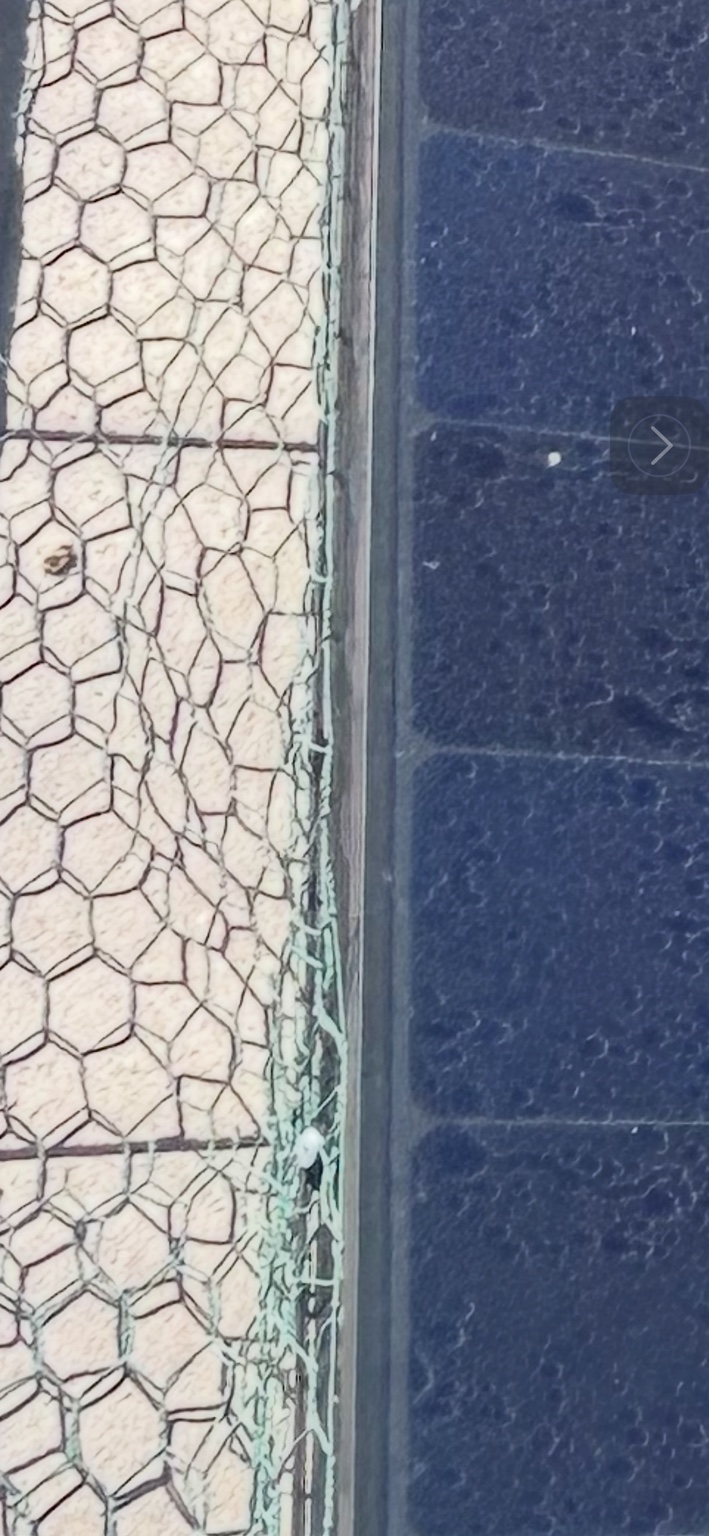
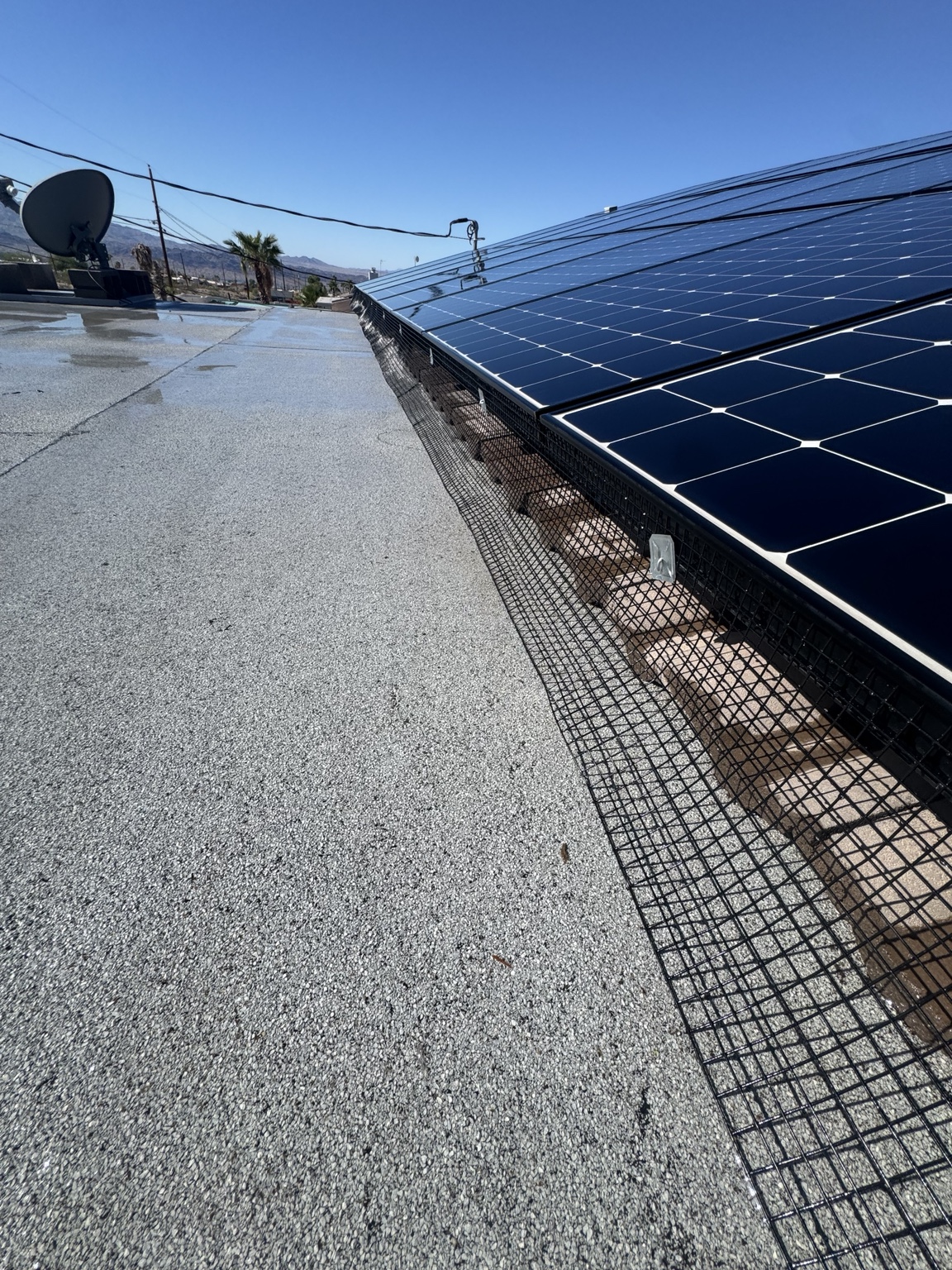
First photo: attachment area on the installation PJ Solar inspected. Second photo: a separate PJ Solar example using mesh and nonpenetrating clips. The drilled attachments were identified during the onsite inspection.
A problem we found during cleaning
On a recent cleaning visit, we discovered chicken-wire-style netting attached to solar panel frames using drilled fixings. The customer had trusted a friend to do the bird proofing. Our job was to explain the condition we found and why it needed correction.
A homeowner may never see the attachment points closely enough to recognize the problem. Asking for clear pictures of the fasteners before approving the job can prevent that surprise. The photograph should show how the mesh connects to the frame, not simply a distant view of the roof.
The manufacturer warning is direct
Canadian Solar’s Installation Manual of Standard Solar Modules, July 2020 revision, page 12, states:
“Do not drill additional holes or modify the module frame. Doing so will void the warranty.”
That is a specific manufacturer instruction with a stated warranty consequence. Before any attachment is selected, the installer should check the instructions for the actual panel model. A customer should never be asked to accept unauthorized drilling as an ordinary part of bird proofing.
A small hole can create a large expense
The hole remains after the screw is removed. Installing new mesh does not restore the original frame or automatically restore coverage. If a manufacturer rejects a claim under an applicable exclusion, the owner may face repair or replacement costs out of pocket. That is why the attachment method deserves attention before the lowest estimate becomes the deciding factor.
A professional assessment should establish where the holes are, how the attachments were made and whether other components were affected. The manufacturer or responsible solar service provider should advise on the existing modifications. We do not promise that swapping the bird barrier will erase them.
What to do if your panels were already drilled
Keep the installer’s invoice, messages and photographs. Arrange a professional inspection that documents the affected frames and attachment points. Ask your solar provider or manufacturer for written guidance about the modifications and any required corrective work.
Have the improper barrier removed through a planned professional correction. The replacement should use suitable solar mesh and compatible nonpenetrating clips. Avoid another round of improvised screws or repairs that creates more damage. Homeowners should not climb onto the roof to remove fasteners themselves.
Choose the attachment method before the price
Ask one direct question before hiring: Will you drill new holes into my solar panel frames? Then ask the installer to show you the exact clips and explain how they fit your panels. Proper documentation protects you long after the crew leaves.
PJ Solar can inspect your existing bird proofing, document what we find and explain the appropriate next steps. Contact us for an on-site estimate before a low-cost installation turns into an expensive problem.